
The short answer
Google reviews matter, but they aren’t a league table. A competitor may be closer to the person searching or a better match for that particular service. Google also considers how well known a business is. Review count is only one part of the picture.
Are you comparing the same kind of result?
First, check whether the competitor’s result is labelled as an ad or sponsored placement. Paying for an advert is different from appearing in the unpaid map or website results.
Next, note the exact search and where you searched from. “Electrician near me” and “switchboard upgrade” are different requests. Results can also change when the customer is in another suburb.
Google looks at more than stars
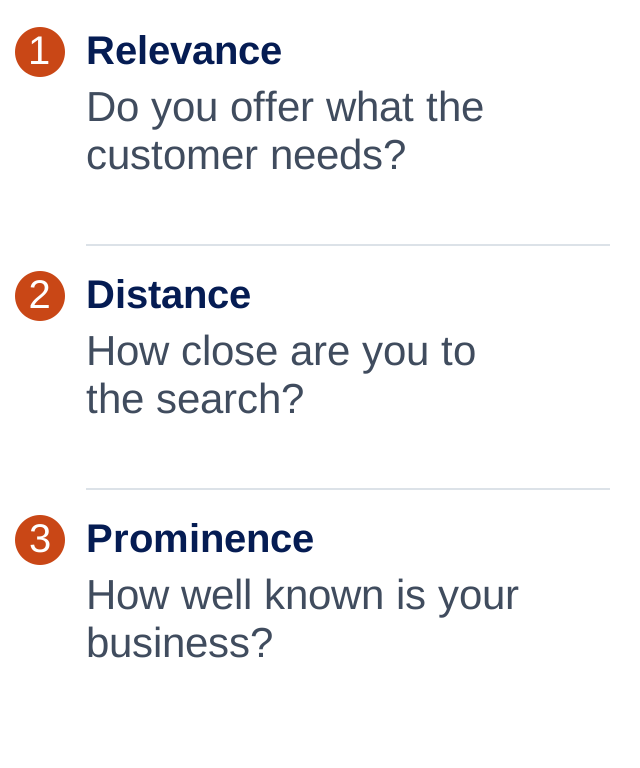
Google explains local ranking using three main ideas. Here’s what they mean in everyday terms.
- Relevance: does this business match what the person needs?
- Distance: how far away is the business from the searcher or the place they’re searching?
- Prominence: how well known is the business? Reviews and links from other websites can contribute.
Reviews are one piece of the puzzle
Tidy up what you can control
You can’t move your business closer to every customer. You can make it easier to understand and contact you. Check the business category, services, hours, phone number and website link on your listing.
Then open the linked website page. Does it actually explain the service? Can people see where you work and how to request a quote? A page that leaves those questions unanswered deserves attention.
Don’t add extra keywords to your business name unless they are genuinely part of the name you use in the real world. Accurate details matter more than a clever-looking shortcut.
Keep asking for reviews—just don’t make it a race
Ask real customers for honest feedback after you’ve done the work. Don’t buy reviews, offer rewards or send the public review link only to people who say they’re happy.
Read the feedback as well as counting it. If customers keep mentioning slow replies, fixing that problem is more useful than finding a way to send another reminder.
Judge progress by the enquiries and jobs you want, not one search on your own phone. A higher review count is nice. More suitable customers are the point.
Common questions
Do more reviews help local rankings?
Google says more reviews and positive ratings can help local ranking. They don’t outweigh every other factor, so a higher review count doesn’t guarantee a higher position.
Why are the results different on someone else’s phone?
The person’s location and the search they use can change the results. Compare the same service and area, rather than treating one screenshot as the full picture.
Should I add more suburbs to my business name?
No, unless they are genuinely part of your real-world business name. Use the proper service and service-area fields to describe where you work.
Should I stop asking for reviews if I’m not moving up?
No. Honest reviews also help people decide whether to contact you. Keep a fair, steady request process while checking the other parts of your listing and website.
ONE THING TO TRY
Start here.
Check one competitor result: is it an ad, what service was searched, and where was the search made? Then compare your service information—not just the stars.
If you’d like to read more
Official guidance behind this guide. The examples and practical suggestions are ours.