
The short answer
Start with what your business can afford, how many extra jobs you can handle and what is left from each job after delivering it. Count advertising, management and support costs together. Use a small, measurable plan rather than borrowing a percentage from a completely different business.
How much extra work do you actually want?
“More customers” sounds good, but be specific. Do you want four more repair jobs a month, two larger projects or a fuller appointment book?
Think about the time to answer enquiries and prepare quotes too. There’s little point paying for work you can’t fit in or follow up properly.
Pick the type of work you want more of. A diary full of low-margin jobs may not be the result you were hoping for.
Look at what’s left, not just the sale price
A $600 job doesn’t leave $600 to spend on marketing. You still need to pay for the labour, materials and other direct costs of doing it.
The amount left also needs to help cover your regular bills and profit. That’s why a big revenue number on an advertising report can be misleading.
A simple budget conversation
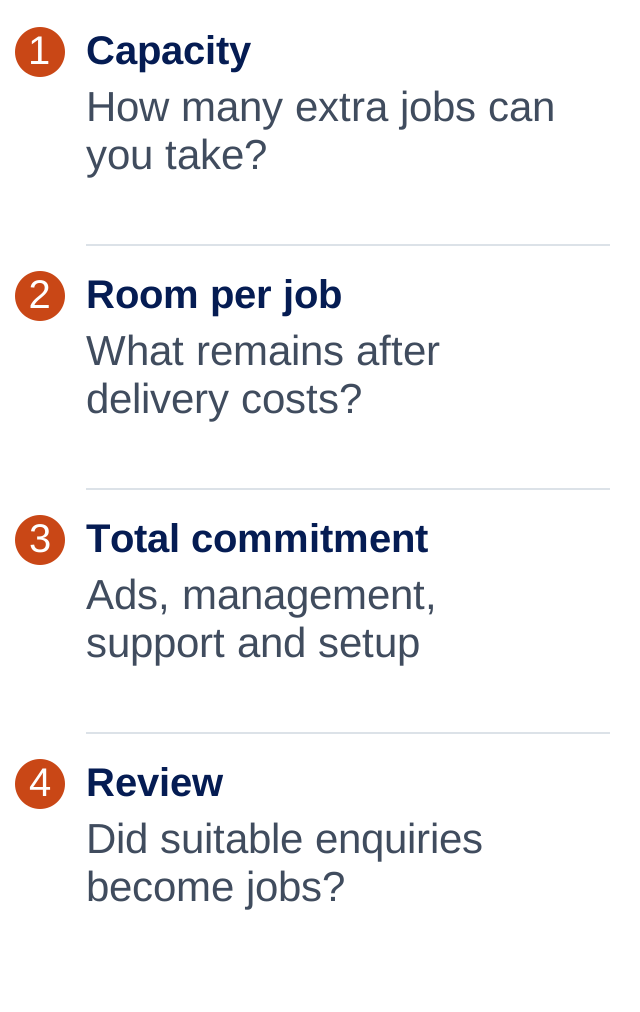
Add up the whole monthly commitment
Don’t look only at the advertising budget. List what you will actually pay and keep one-off setup work separate from ongoing costs.
- Money paid to the ad platform.
- Campaign setup and management.
- Website hosting and support.
- Review or enquiry software.
- Any content, photos or new pages needed.
Use a simple test, then replace guesses with real numbers
Suppose you want four extra customers and you usually win one in four suitable enquiries. You would need roughly sixteen suitable enquiries under that assumption. It’s a planning example, not a forecast.
Record how many enquiries are suitable, how many you quote and how many become jobs. A wrong-area enquiry is not the same as someone ready to buy your service.
Choose a budget you can afford to test and a review date. Agree what would make you keep going, change something or pause. If the enquiry process is broken, fixing that may be the best first spend.
Our free calculator helps you explore your own numbers. It doesn’t predict clicks, rankings or sales. Use consistent figures—for example, all excluding GST—and allow separately for overheads, cash flow and tax.
Common questions
Is there a standard percentage I should spend?
A percentage can be a rough reference, but it isn’t a complete plan. Your costs, margins, growth goals, cash flow and available capacity matter more than copying another business.
How many extra jobs will my budget bring?
Nobody can know that from the budget alone. Results depend on your offer, market, website and follow-up. Start with a clear test and use actual enquiries and sales to judge it.
Should I include hosting and management in the budget?
Yes, include the costs you need to pay when deciding what is affordable. Keep the categories separate so you can see which costs support a campaign and which support the business generally.
What if I only have a small budget?
Start with the clearest problem and one achievable improvement. A working enquiry form, clearer service page or better follow-up may be a better first step than spreading a small ad budget across several channels.
ONE THING TO TRY
Start here.
Choose one realistic extra-jobs target, list the full monthly costs and try the budget calculator below with your own figures.